
Cover 0 Blitz: a 5v5 flag football defense
One defender rushes, and the other four each take a receiver, with nobody deep. The quarterback has about two seconds before the rusher arrives, and every receiver is covered. It's the most aggressive call in 5v5 flag football: it wins plays outright or gives up a touchdown.
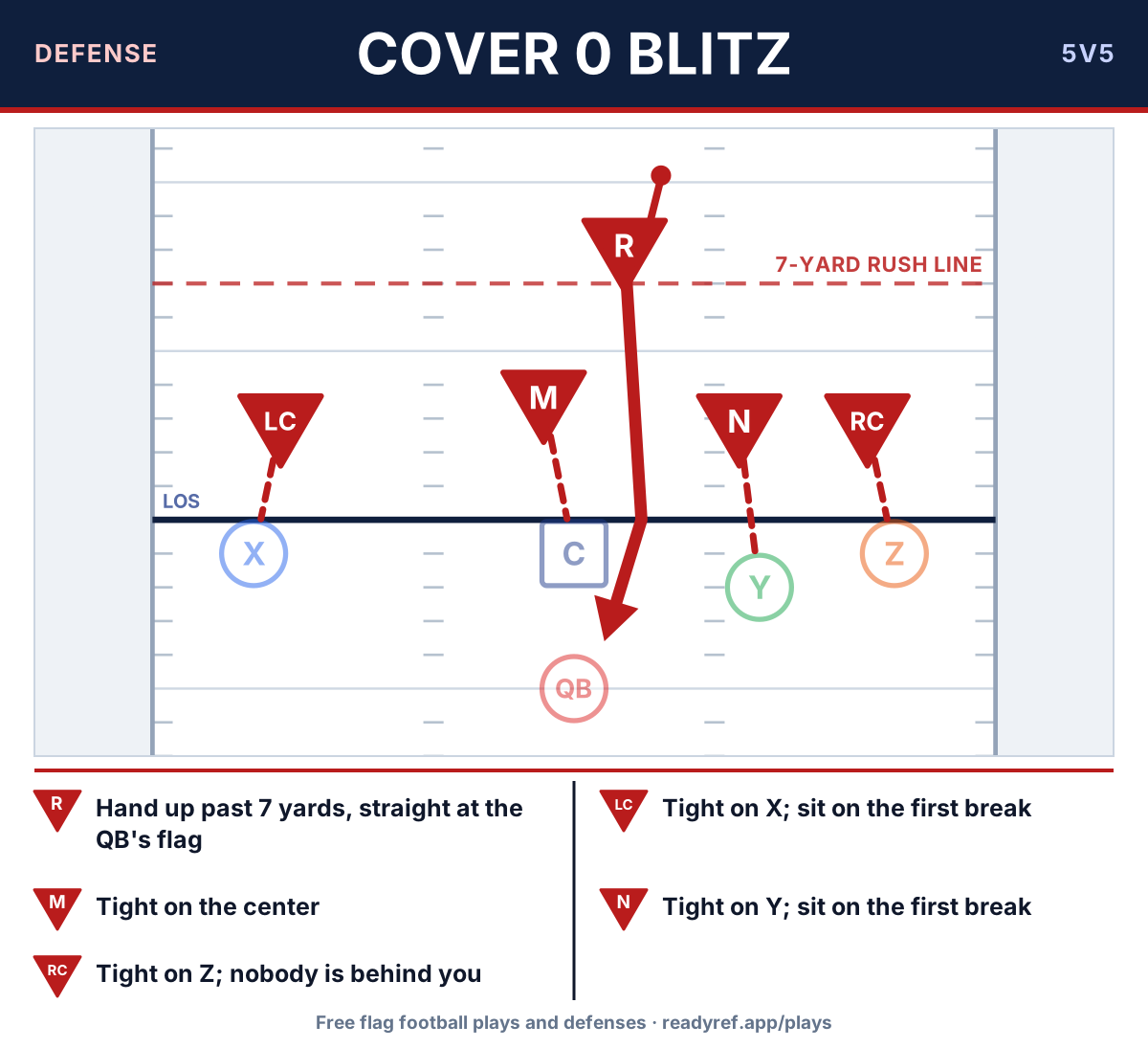
Each defender's job
- R (rusher) lines up more than 7 yards off the line and raises a hand to signal the blitz. At the snap, go straight at the quarterback's flag.
- LC covers X, RC covers Z, N covers Y and M covers the center. Play tight, 2 to 3 yards off, and take away the quick throw.
- There's no safety. Every defender has to win their own matchup.
Reads and keys
- Man defenders: the ball is coming out fast, so sit on the first break: the slant, hitch or out.
- Watch for the double move. A receiver who stops and goes again is attacking you because nobody is behind you.
- Rusher: straight line, full speed. A rusher who curves loses half a second.
- If the ball is caught, everyone sprints to it. One missed flag pull is six points.
Coaching points
- Call it as a surprise, not every down. A team that sees it coming throws the quick slant before the rusher gets there.
- Disguise it: line up in your normal zone look, then the rusher steps back past 7 yards just before the snap.
- Pick your matchups. Don't call it if one of their receivers is much faster than everyone you have.
- Flag pulling is the whole defense. Practice it all week before you call it on game day.
When to call it
On a down where the offense needs a few yards and its quarterback holds the ball, after a sack or a penalty puts them behind schedule, or against a young quarterback who locks onto one receiver. Not against a team that beats you with the hitch-and-go.
For youth teams
Use it rarely. Young defenders often lose their receiver, and with no safety behind them that's a touchdown. Most youth teams are better off with the rush 3-1.
Rules check
IFAF (5v5, 7v7 and beach)
The rusher has to start more than 7 yards off the line to cross at the snap (R 7-1-4-e). Up to two defenders may raise a hand to signal a blitz, only from beyond 7 yards (R 7-1-4-d), and a signalled blitzer rushing straight at the quarterback has right of way: a receiver who cuts across that lane commits shielding (R 2-2-6). The four man defenders start within 7 yards, so they can't cross the line until a handoff, fake handoff or pass (R 7-1-4-f).
NFL FLAG and other rulebooks
NFL FLAG rushes from a 7-yard rush line too, and rules on how many players may rush, and how they signal, vary by division. Check your league's rulebook before you send more than one.
Rule numbers refer to the IFAF International Flag Football Rules 2023, the current edition. Test yourself on the rushing rules with the free rules quiz.
Know what the defense is doing
Every play in the free library lists the coverage it beats. Build your playbook in the free play maker and print wristband cards for game day.