
Rush 3-1 Zone: a 5v5 flag football defense
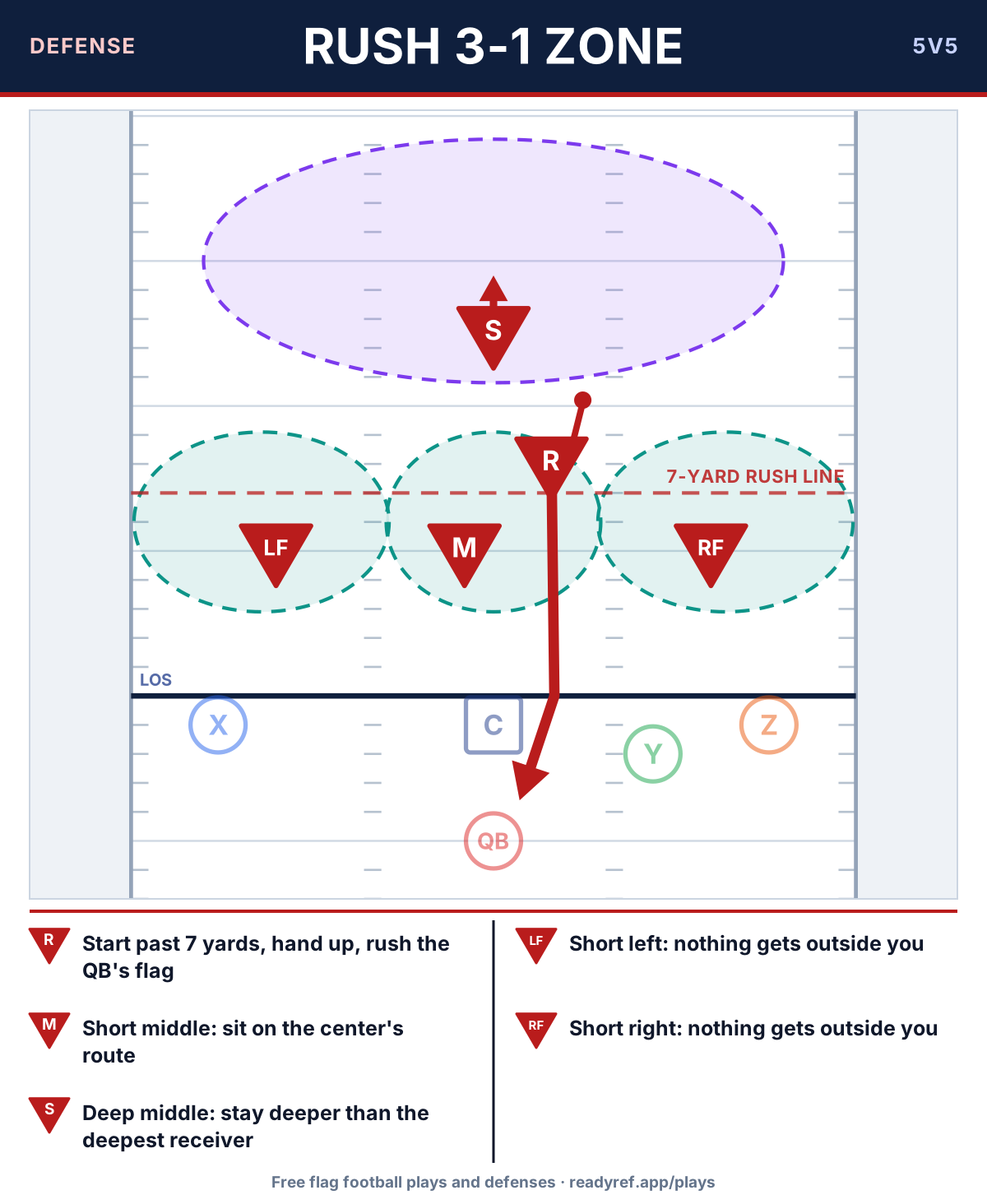
One defender rushes the quarterback from beyond 7 yards, three spread across the short field, and one safety stays deep. The rush speeds the quarterback up, and the three underneath defenders are waiting for the quick throw that follows. It's the natural next step after the 3-2 zone: you trade one deep defender for pressure.
Each defender's job
- R (rusher) lines up more than 7 yards off the line, a step to one side of the center, and rushes the quarterback's flag at the snap. Aim at the quarterback's throwing shoulder, not where they are now.
- LF and RF (flats) line up 5 yards deep, outside the slot. They own the short sideline: quick outs, flats and sweeps. Nothing gets outside them.
- M (middle) lines up 5 yards deep over the center and owns the short middle: the center's route, slants and drags.
- S (safety) starts 12 to 13 yards deep in the middle and takes anything thrown over the top. Stay deeper than the deepest receiver.
Reads and keys
- Flats: eyes on the quarterback, feel the receiver in your area. When the ball goes up, break on it.
- Middle: the center is usually the quarterback's safety valve. Sit in that throw.
- Safety: read the quarterback's eyes. Drift toward the side they look, but never come up for a short route.
- Rusher: if the quarterback rolls out, take the angle to where they're going, not where they were.
Coaching points
- The rush doesn't need a sack to work. A quarterback throwing early to a covered receiver is a win.
- The flats must stay outside. If they pinch in, every sweep and out route is open.
- Everyone rallies to the ball once it's caught. The fastest flag pull is usually the second defender's.
- Rotate the rusher. Rushing is tiring, and a tired rusher arrives a step late.
When to call it
Your every-down call against teams that throw quickly or have a young quarterback. Switch to a two-deep look like the rush 2-2 if they start hitting deep sideline throws.
For youth teams
Easy to teach because every defender has one simple area. Put cones at 5 yards for the flats and middle, and a cone just past 7 yards so the rusher always knows where to start.
Rules check
IFAF (5v5, 7v7 and beach)
A defender who lines up more than 7 yards off the line may cross it at the snap (R 7-1-4-e), so the rusher has to start beyond 7 yards. They can also raise a hand before the snap to signal a blitz (R 7-1-4-d); a signalled blitzer rushing straight at the quarterback has right of way, and receivers have to stay out of that lane (R 2-2-6). The three underneath defenders start within 7 yards, so they stay behind the line until the quarterback hands off, fakes a handoff or passes (R 7-1-4-f).
NFL FLAG and other rulebooks
NFL FLAG also rushes from a 7-yard rush line, and any defender may rush once the ball is handed off or pitched. Rules on how many players may rush, and how they signal, vary by division, so check your league's rulebook.
Rule numbers refer to the IFAF International Flag Football Rules 2023, the current edition. Test yourself on the rushing rules with the free rules quiz.
Know what the defense is doing
Every play in the free library lists the coverage it beats. Build your playbook in the free play maker and print wristband cards for game day.