
Cover 1 Man: a 5v5 flag football defense
Four defenders each take one receiver, wherever they go, and a free safety plays deep in the middle as help. Zone-beating plays stop working, because every receiver has a shadow. With no rusher, the quarterback has time, so this works best when your defenders are at least as fast as their receivers.
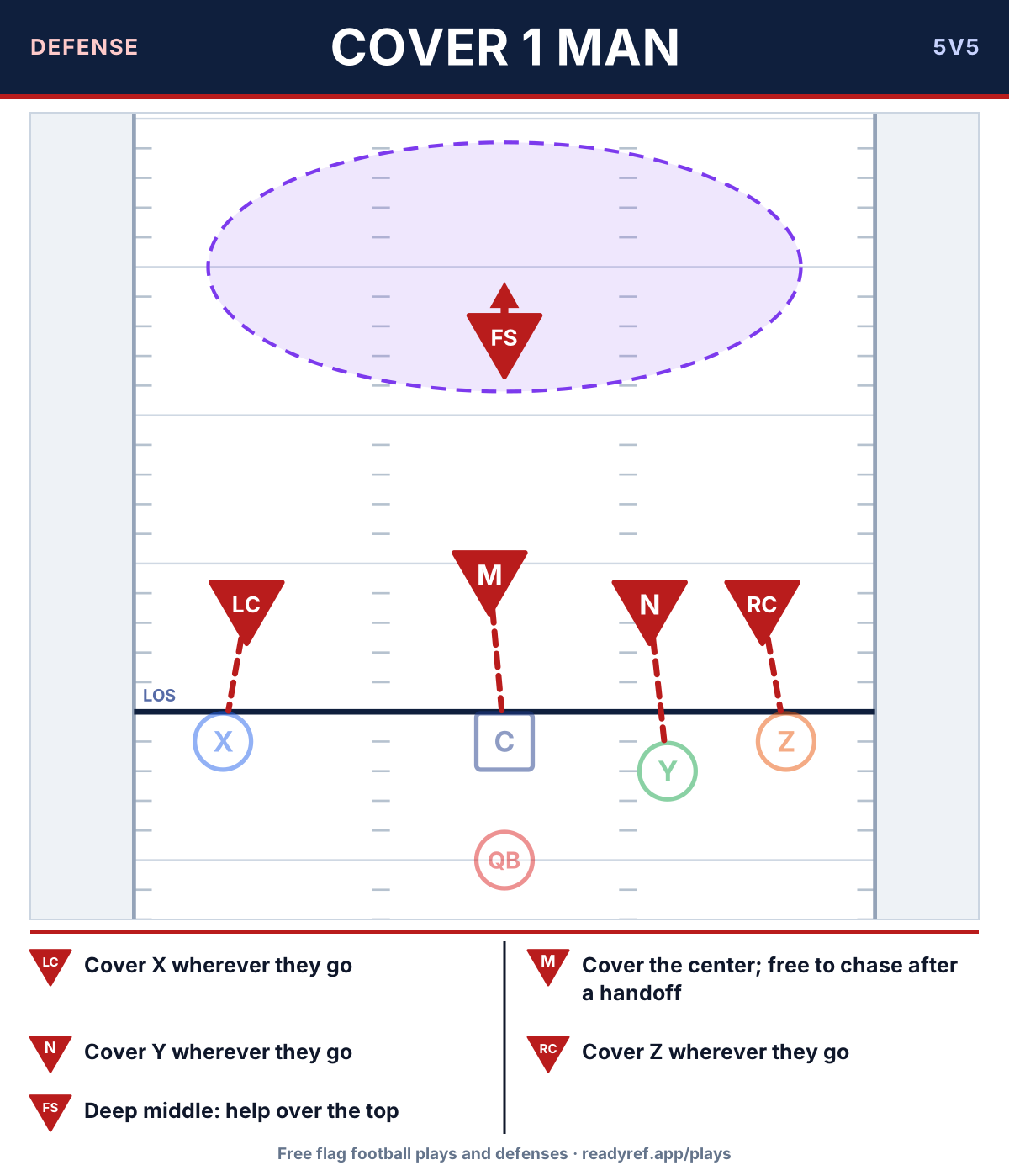
Each defender's job
- LC covers X, RC covers Z and N covers Y. Line up 3 to 4 yards off your receiver, slightly inside, and stay on them wherever they go.
- M covers the center. If the center stays in to protect, M is free to cross the line once the quarterback hands off, fakes a handoff or throws.
- FS (free safety) starts 12 to 13 yards deep in the middle and helps on anything deep. The man defenders can play tight underneath because FS is behind them.
Reads and keys
- Man defenders: watch your receiver's hips, not their head or arms. The hips tell you where they're going.
- Stay on the inside shoulder. Make every throw go outside, toward the sideline and toward the safety.
- FS: read the quarterback and drift to the side they look, but stay deep.
- Everyone: when the ball is in the air, turn and find it. When it's caught, pull the flag first.
Coaching points
- Match speed to speed. Put your fastest defender on their fastest receiver.
- Play tight underneath and trust the safety over the top.
- No contact: shadow the receiver, never hold or bump. A step of space is fine.
- Call out switches before the snap if receivers line up stacked or bunched, so two defenders don't chase the same player.
When to call it
Against a team that keeps beating your zone with floods and curl-flats, on short yardage, and in the red zone, where there's less field to cover.
For youth teams
Simple rule for kids: "find your player and stay with them". Have defenders point at their receiver before every snap. Watch for players who stop running when their receiver does.
Rules check
IFAF (5v5, 7v7 and beach)
All five defenders start within 7 yards or drop deep, so nobody rushes at the snap. A man defender who starts within 7 yards may cross the line only after a handoff, a fake handoff or a pass (R 7-1-4-f); a pump fake doesn't release them. Receivers may not run a route that impedes a defender, and that shielding rule also makes the classic pick play against man coverage a foul.
NFL FLAG and other rulebooks
Man coverage is legal everywhere. Flag football is non-contact, so defenders cover without holding or bumping. Rushing rules after a handoff vary by league, so check your rulebook.
Rule numbers refer to the IFAF International Flag Football Rules 2023, the current edition. Test yourself on the rushing rules with the free rules quiz.
Know what the defense is doing
Every play in the free library lists the coverage it beats. Build your playbook in the free play maker and print wristband cards for game day.