
Best defense for 5v5 flag football: the 3-2 zone
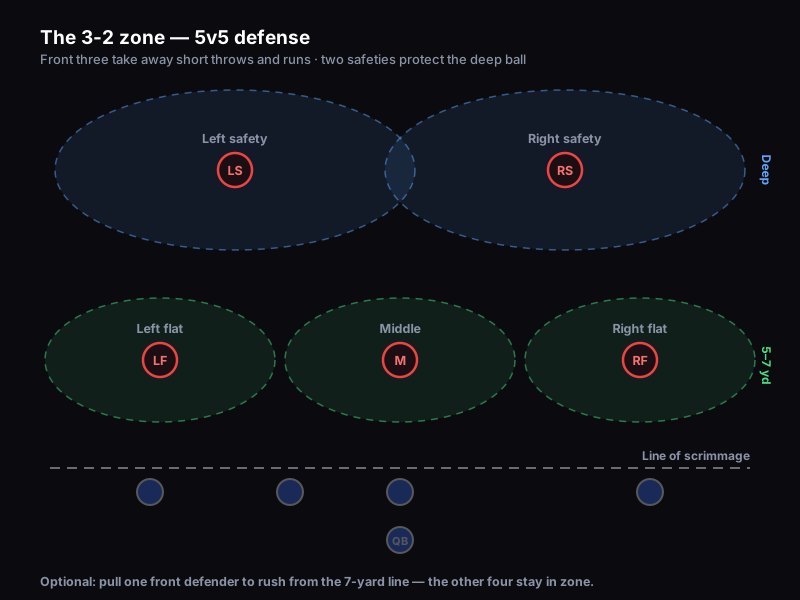
For most youth and beginner 5v5 teams, the best defense is a simple 3-2 zone: three short defenders across the first-down area and two deep defenders protecting big plays. It is easy to teach, hard to beat with one throw, and forgiving when players are still learning angles.
- A 3-2 zone is the safest default defense for beginner 5v5 flag football.
- The front three take short throws, handoffs, and flag pulls; the back two stop deep routes.
- In NFL FLAG, a rusher must start at the 7-yard rush line; once the ball is handed off, pitched, or thrown backward, all defenders may rush.
- Switch to man coverage only when your players can match routes without losing contain.
- Defense improves fastest when you track stops, flag pulls, and turnovers, not only touchdowns allowed.
Why the 3-2 zone works
Beginner offenses usually win with three things: a fast runner in space, a deep ball behind the defense, or a short throw where nobody pulls the flag. The 3-2 zone answers all three. It keeps defenders in front of the ball, gives help over the top, and lets the front line rally to short completions.
How to line it up
- Left flat defender: protects short left, outside runs, and quick outs.
- Middle defender: watches the center, short middle, and crossing routes.
- Right flat defender: mirrors the left flat defender on the other side.
- Left safety: protects deep left and helps on posts crossing the field.
- Right safety: protects deep right and communicates route switches.
If your league allows one designated rusher, pull that player from the middle or from the side closest to the quarterback's throwing hand. In NFL FLAG, the rush line is 7 yards from the line of scrimmage, and local 7v7 or school rules may use different rush rules.
Simple calls to install
Base
Standard 3-2. Front three at five to seven yards, safeties deeper. This is your every-down call.
Short
Use near midfield or a no-run zone when the offense needs only a few yards. Front defenders sit tighter and force a throw into traffic.
Deep
Use late in the half or against a team hunting a big play. Safeties stay patient and give up the short completion if it keeps the clock moving.
Rush
Send one legal rusher while the other four play zone behind it. The goal is not always a sack; pressure forces quick throws.
When to use man defense
Man coverage can work if your defenders are faster, disciplined, and comfortable pulling flags in space. It also helps against teams that overload one side of the field. The risk is simple: one missed flag pull can become a touchdown. For young teams, use man as a change-up, not the whole game plan.
Common mistakes
- Chasing receivers across zones. Pass them off and protect your space.
- Standing flat-footed. Defenders should shuffle with eyes on the quarterback.
- Rushing illegally. Know the rush line, count, and handoff rules for your league.
- Going for interceptions first. Pull the flag, then hunt turnovers once the defense is sound.
Frequently asked questions
What is the best defense for 5v5 flag football?
For beginners, a 3-2 zone is usually the best starting point because it protects short and deep areas without asking every defender to win one-on-one.
Should kids play zone or man in flag football?
Start with zone. Add man once players understand spacing, pursuit angles, and how to avoid illegal contact.
How many rushers can you send?
It depends on the rulebook. NFL FLAG allows designated rushers from the 7-yard rush line, with different details by event and division; 7v7, youth, and NFHS-style leagues can vary.
Coach the defense with a clean game log
ReadyRef tracks scores, turnovers, and live game events so you can see whether your defense is forcing short drives, not just whether it gave up points.