
Flag football plays for beginners: a simple 5v5 and 7v7 playbook
You don't need 40 plays to win in flag football — you need a handful that everyone runs well. This is a beginner-friendly playbook: the core route concepts, a few reliable plays for 5v5 and 7v7, and how to actually call them on game day so your team stays a step ahead.
- Master a few route concepts (slant, post, corner, screen) before adding plays — most plays are just combinations of these.
- Spacing beats trick plays: keep receivers spread so one defender can't cover two.
- Have a "get the first down" play, a "score from the red zone" play, and a quick screen for pressure.
- Name plays simply so kids and adults can remember them in the huddle.
- Rules like no-run zones and the rush count shape which plays are legal — check your league's book.
Start with route concepts, not plays
A "play" is just a set of routes run together. If your players understand a few basic routes, you can build an entire game plan from them. The five that carry beginner flag football:
- Slant — a few steps upfield, then a sharp angle in. Quick, hard to defend, great against a rush.
- Post — straight upfield, then break toward the middle. The big-play route.
- Corner (flag) — upfield, then break to the sideline. Pulls a defender away from the middle.
- Out / hitch — a short route that turns back to the QB. Reliable for first downs.
- Screen — a receiver slips behind the line for a quick toss, turning blockers into space.
Spacing wins flag football
The single most common beginner mistake is bunching up. When two receivers run into the same area, one defender covers both. Spread your players across the width of the field so every defender has to choose, and the quarterback always has someone open. Good spacing makes simple plays look brilliant.
Five beginner plays that work
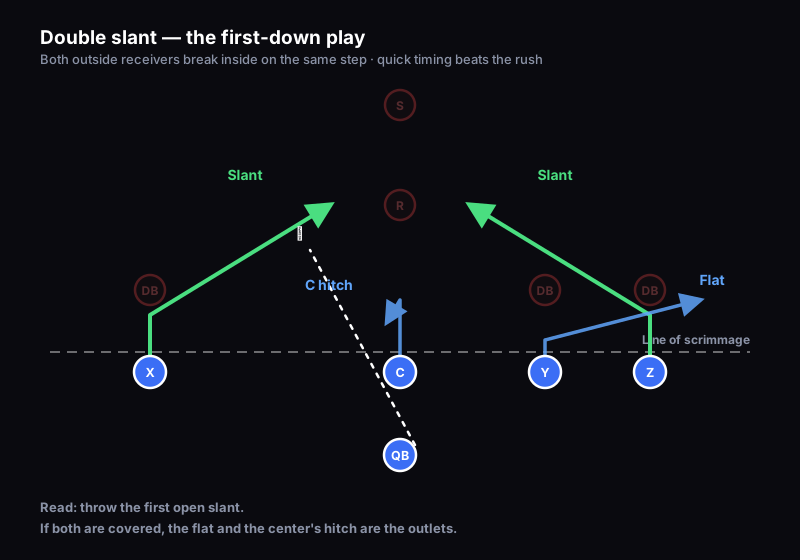
1. Double slant (move the chains)
Two receivers run slants from opposite sides. It's almost impossible to cover both, and the quick timing beats a rush. Your bread-and-butter first-down play.
2. Post-corner combo (stretch the field)
One receiver runs a post, another runs a corner from the same side. The two routes break in opposite directions and force a defender to pick — someone comes open deep.
3. Bubble screen (beat the rush)
A receiver takes a step back behind the line; the QB throws it instantly. With a teammate or two in front to seal defenders, it turns aggressive pressure into open grass.
4. Hitch-and-go (the double move)
The receiver fakes a hitch, the defender bites, then the receiver turns it upfield. A great change-up once a defense starts jumping your short routes.
5. Flood (red-zone score)
Send three receivers to the same side at different depths — short, medium, deep. The defense can't cover all three levels; the QB reads top-down and takes the open one.
5v5 vs 7v7: what changes
In 5v5, you usually have a center who snaps and then releases, leaving three or four eligible receivers. Plays stay simple and spacing is everything. In 7v7, the extra bodies let you add a second route combination on the backside and use motion to create mismatches — but the same core concepts still drive every call.
Calling plays on game day
- Keep names simple. "Slants," "Flood right," "Screen left" beat long codewords — especially with kids.
- Script your first few plays. Decide your opening calls before the whistle so you start fast.
- Have answers ready. One play for pressure (screen), one for a first down (double slant), one to score (flood).
- Watch what's open. If a route keeps coming open, call it again until they stop it.
Frequently asked questions
How many plays should a beginner team have?
Five to eight that everyone runs well beats a thick playbook nobody remembers. Add plays only once the basics are automatic.
What's the best flag football play for a first down?
The double slant. It's quick, beats the rush, and gives the QB two reads that are hard to cover at once.
Do no-run zones affect my plays?
Yes — in a no-run zone the offense must pass, so screens and quick routes matter more there. See our rules guide for how no-run zones and the rush count work.
Track every play you call
ReadyRef logs each play with downs, yardage, and the result — so you can see which calls actually move the chains and build a smarter game plan next week.